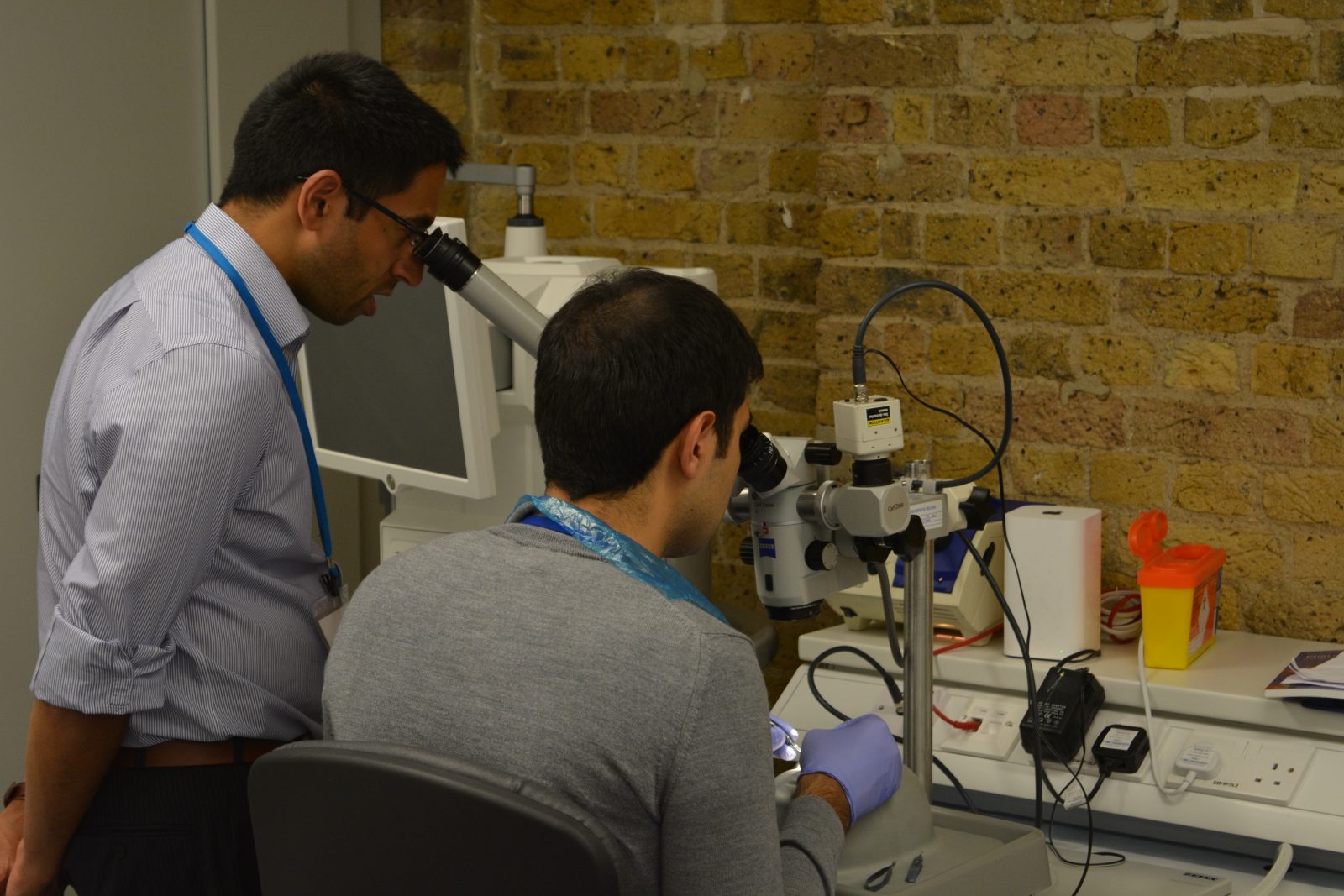

Ophthalmic Trainees Forum question and answer session at Congress 2019

Support for Resident Doctors and Trainers

Resident doctors and trainers are supported throughout the OST programme.

Support for Resident Doctors

Resident doctors are represented through the Ophthalmologists in Training Group (OTG). The OTG’s role is to represent local peers and act as a conduit between residents and the College standing committees, as well as relevant sub-committees and outside organisations. The group is accountable to Council.

The College has developed resources to navigate Curriculum 2024 and the ePortfolio.

Support for Trainers

Trainers are an integral part of the OST programme as they deliver the OST Curriculum and teach and assess the progress of ophthalmologists in training.

The College has developed a dedicated Supervisor Training Package to assist with the delivery of Curriculum 2024.


 

OST Curriculum 2020 (2016) resources

ARCP Guidance

Guidance on the Annual Review of Competence Progression (ARCP) process.

Acute Services Training

RCOphth Training Committee guidance setting out the agreed principles for managing acute/emergency ophthalmology during training.

Simulation Training in the UK

Document highlighting the benefits of, and different types of, simulation training ophthalmologists in training should be familiar with.

Cataract Surgery Guidance

Clarification and guidance on cataract surgery competences and assessment - only applicable to resident doctors still following OST Curriculum 2010 (2016).

Reflection

Ophthalmology is an immensely diverse branch of medicine. It is scientifically complex, constantly developing and provides opportunities for fulfilling experiences, but also requires doctors to manage uncertainty and the emotional demands of supporting patients and colleagues. Reflecting on this broad range of experiences is essential for professional development, high quality care and personal wellbeing.

Academy Guidance on ePortfolios

AoMRC guidance to help doctors in training, and their supervisors, in considering how to record their reflective practice.

Practical information

Less Than Full-Time Training (LTFT)

The delivery and organisation of LTFT is the responsibility of the individual HEE local offices / Deaneries. This document contains hints to make the most of LTFT and avoid common pitfalls.

Training notices

We publish key training notices to clarify the requirements for training and templates that will support ophthalmic training. These are reviewed bi-annually to ensure that they remain accurate and relevant. Updates will be cascaded through newsletters, eye-mail and social media channels.

Continuous cataract complications audit letter

Letter highlighting the curriculum requirement for trainees to maintain a continuous audit of cataract complications from the beginning of their training. This should be read alongside the 'Continuous cataract complications audit synopsis template'.

50 consecutive cases cataract audit guidance

It is a curriculum requirement for trainees to present a 50 consecutive cases cataract audit paper (with comparison to national standards) supported by raw data. This document should be read alongside the 'Example model 50 cases cataract audit'.

Simulation

As a surgical-based specialty, ophthalmology encompasses a wide range of operations and clinic-based procedures, requiring ophthalmologists to make use of micro-surgical techniques. Simulation training enables trainee ophthalmologists to master these skills before in vivo training.

Find out more