Training programmes
There are three training programmes:
- Ophthalmic Specialist Training: Resident doctors join this programme after completing two years of foundation training and applying for a training post through National Recruitment.
- Ophthalmic Local Training: Non-numbered training posts for trust-appointed specialty doctors.
- Ophthalmic Practitioner Training: Training for postgraduate orthoptists, optometrists and ophthalmic nurses that develops skills in cataract, glaucoma, medical retina or emergency eye care.
How the College delivers ophthalmic training
The College plays a key role in the training of ophthalmologists. We ensure ophthalmologists provide excellent patient care by:
- Developing and reviewing the OST Curriculum
- Delivering examinations
- Providing training to perform safe and efficient eye surgery
- Offering awards and scholarships opportunities
- Offering advice on education and training matters
- Providing an ePortfolio where to record training progression
[email protected] and [email protected] should be the first port of call for training and education queries.
The role of simulation in training
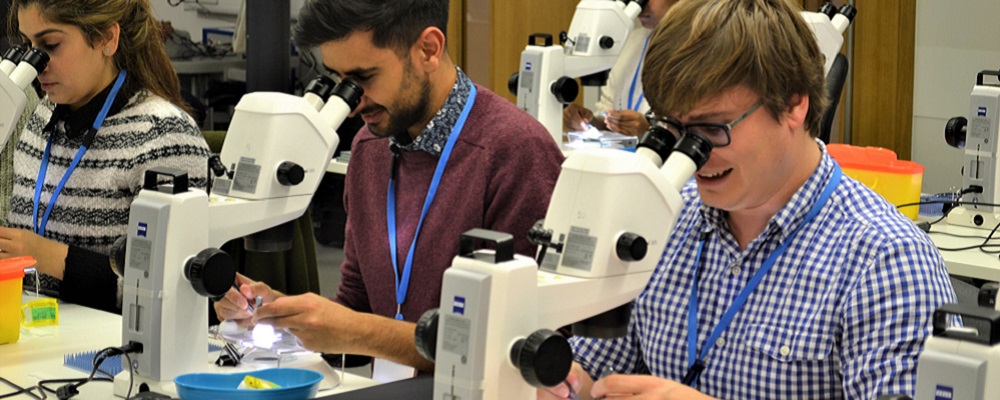
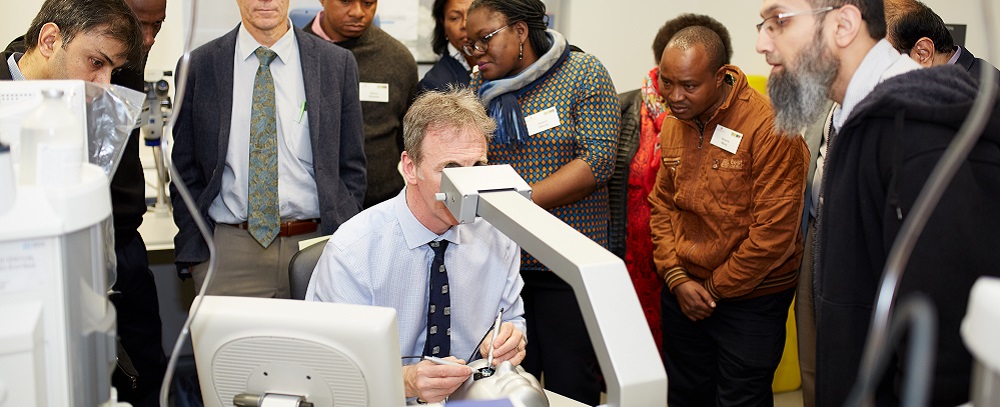
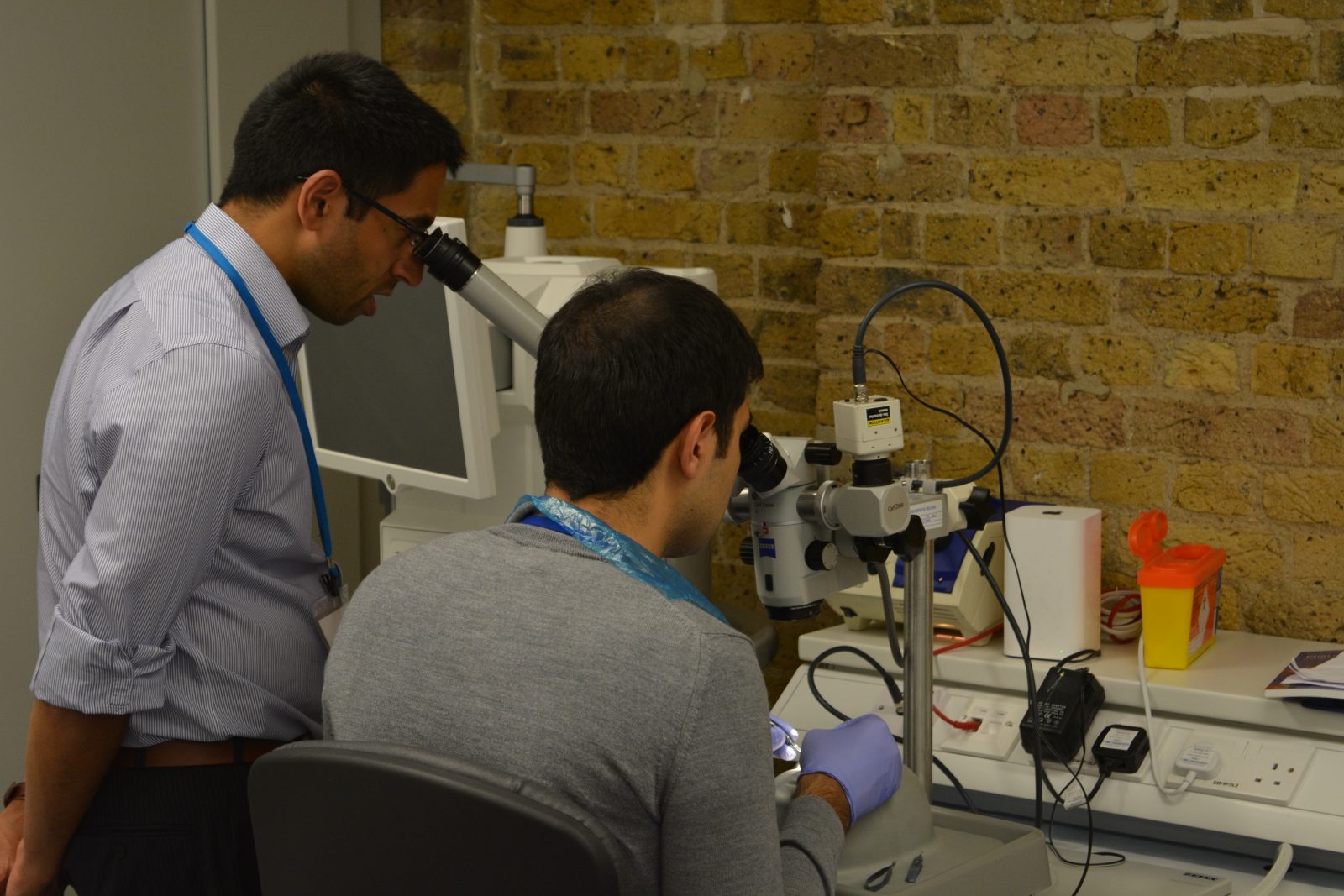
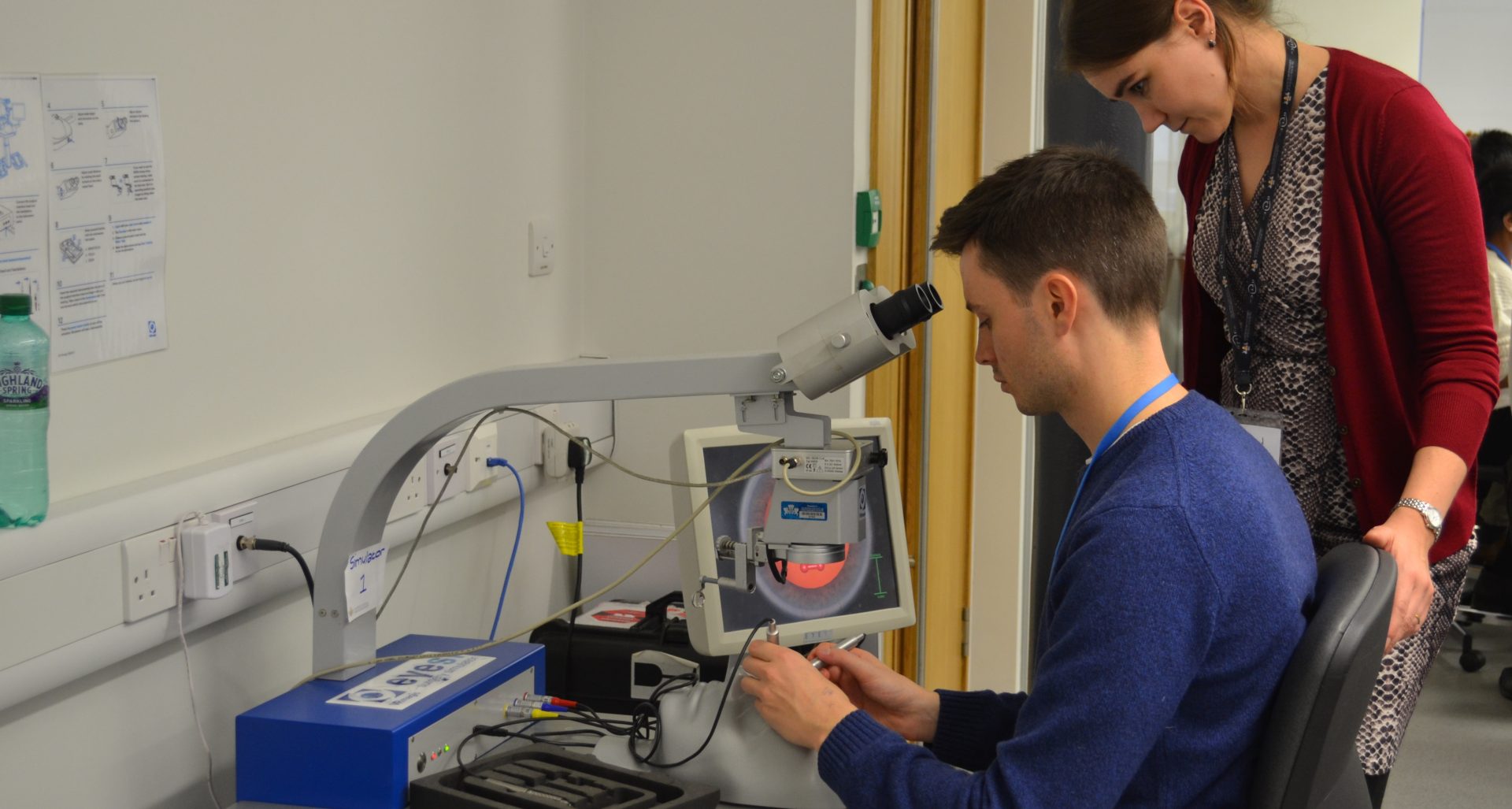
Simulation facilities help train ophthalmologists in the development of surgical and clinical skills by simulating live surgery situations. Frequent practice on simulators, such as the state-of-the-art EyeSi surgical simulators, enables training ophthalmologists to become familiar with surgical steps and finesse their techniques in a safe environment.
Click here for more information about simulation.
Support for trainers
The College is committed to supporting doctors throughout their careers. Trainers will find the range of resources available on the ‘Support For Training’ pages under each training programme. These pages provide a resource hub for both trainers and trainees.
Find links to the ‘Support For Training’ pages here:
- Support for Ophthalmic Specialist Training
- Support for Ophthalmic Local Training
- Support for Ophthalmic Practitioner Training.